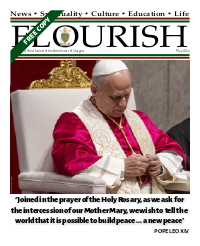
Flourish

Yours faithfully

By

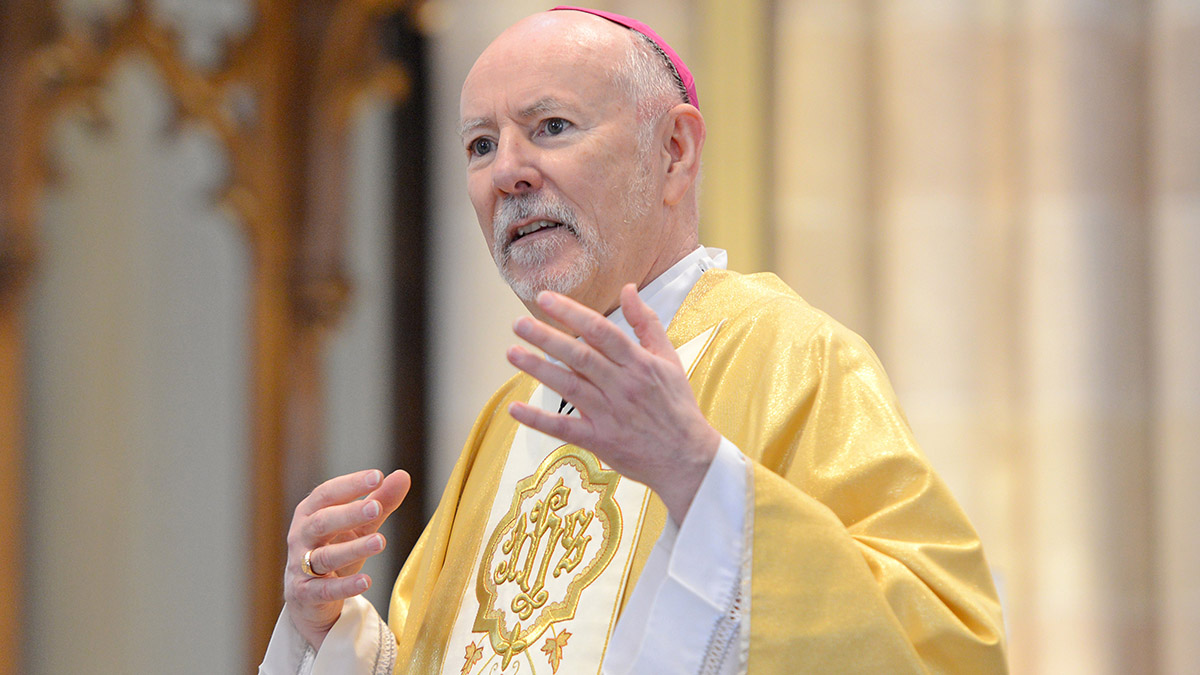
If anyone doubted the quiet revival in Catholicism across the Western world, then this picture contains the evidence.

Read more…

kelvingrove

The Dalí is back!

Glasgow’s best-known – and most valuable – religious painting is back on display in time for Lent.
Read more…

parliament

Step back from the abyss

Scotland may be on the brink of passing one of the most damaging laws in its history — but the ground beneath the proposed assisted suicide bill is visibly crumbling.
Read more…

pope

Pope Leo XIV’s message for Lent

Lent is a time in which the Church, guided by a sense of maternal care, invites us to place the mystery of God back in the centre of our lives, in order to find renewal in our faith and keep our hearts from being consumed by the anxieties and distractions of daily life.


Read more…

March issue

Read now
Download the March 2026 issue of Flourish (PDF, 6 MB)

Recent issues

Yours faithfully

By

If anyone doubted the quiet revival in Catholicism across the Western world, then this picture contains the evidence.

Image illustrating this story
Archbishop Nolan presided at the Rite of Election

This Easter will see 120 ‘new’ Catholics join the Church in the Archdiocese of Glasgow alone – a 20 per cent increase on last year.

The story is the same across Europe, with record numbers of new adult converts being reported in England, Ireland, France and Belgium. Similar growth is reported in the USA.

Canon David Wallace, who oversees the RCIA programme for adults seeking to join the Church, said: “It was lovely to see the Cathedral filled with so many people who are hungry to know more about the Catholic faith and to live it out fully in their daily lives.

“Here at the Cathedral we have been working with 13 adults as they grow in knowledge and faith.

Rewarding

“It has been a deeply rewarding experience as we accompany them now in this last phase of preparation before they are baptised or received into full communion with the Church at Easter.”

Archbishop Nolan said: “It is always one of the highlights of the year for me to preside at the Rite of Election and meet the new generation of people who have made the conscious and active decision to join the Church.

“Recent years have seen a steady growth in numbers, and each of these people can tell their own story of coming to faith, which in itself is an inspiration for us ‘cradle Catholics’.”

Share

The Dalí is back!

By

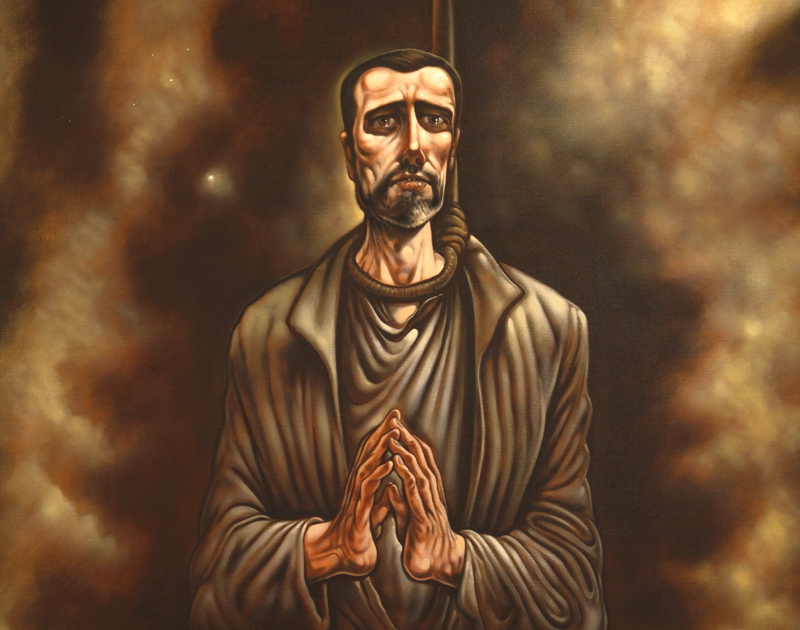
Glasgow’s best-known – and most valuable – religious painting is back on display in time for Lent.

Image illustrating this story
The crucifixion painting is one of Dalí’s best known works

Salvador Dalí’s ‘Christ of St John of the Cross’ had been removed from its traditional location at Kelvingrove Art Gallery in recent months for restoration.

Eagle-eyed visitors might spot a subtle change to the slip – the narrow band around the painting, just inside the frame.

The painting was taken to Rome for the Jubilee last year and drew record crowds leading to Archbishop Fisichella, the Vatican’s head of the Holy Year, encouraging Glasgow’s Catholics to realise the spiritual value of the image and use it as a pilgrimage point.

Positioned on a cross which hovers over a watery landscape, Salvador Dalí’s masterpiece is radically different from other crucifixions.

While simultaneously looking directly out across the water, viewers are also looking down on the image of Christ, positioned above. His head bowed, we are unable to see his face at all.

Instead of the usual attributes we might see in paintings of the crucifix from art history – thorny crown embedded into the forehead, painful-looking nails pinning down bloody hands, and an open gash at the lifeless Jesus’ side – Dalí’s Christ bears no injury. His body is perfect and, as Dalí stated, ‘as beautiful as the God that He is’.

Later explaining the painting, Dalí recalled that he was so impressed by a drawing of the crucifixion made by the sixteenth-century Carmelite Friar Saint John of the Cross, that it inspired a dream.

The painting’s purchase for Glasgow caused controversy. Director of Glasgow Museums Dr Tom Honeyman (1891–1975) was instrumental in its acquisition after seeing it exhibited in London in December 1951. Honeyman and his art committee faced a major public backlash including a protest and petition, even though the price had been negotiated down from £12,000 to £8,200 and included copyright.

Share

Step back from the abyss

Scotland may be on the brink of passing one of the most damaging laws in its history — but the ground beneath the proposed assisted suicide bill is visibly crumbling.

Image illustrating this story
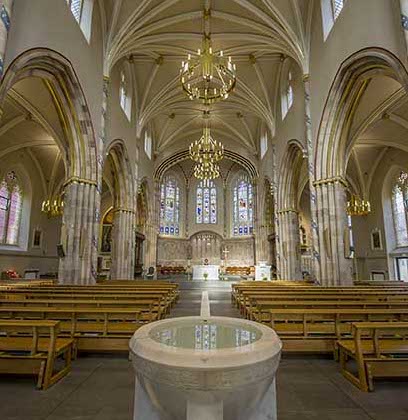
MSPs have expressed concern

In recent weeks, MSPs who previously backed the legislation have expressed significant reservations, warning that the bill cannot protect vulnerable people from pressure to end their lives prematurely.

The SNP’s Audrey Nicoll MSP, a former police officer with 31 years’ experience, now says she will vote against the law because it exposes vulnerable Scots to “coercion and pressure… in ways which may be subtle and difficult to enunciate.”

Her reversal is not an isolated case. Other MSPs admit they can no longer support the bill in its current form, raising doubts about whether it can survive the final vote.

Protections for healthcare workers who object on moral grounds cannot remain in the bill, because they fall under UK‑wide law and will need to be fixed after the Bill passes.

This means that MSPs will be asked to vote blindfolded on a matter of life and death and then hand the reins to Westminster to finish the job.

Labour MSP Michael Marra said this significant setback effectively “holes the bill below the waterline.”

Please help to protect vulnerable people by engaging with your MSPs about this dangerous Bill. You can find your MSP’s contact details here: https://www.parliament.scot/msps/current-and-previous-msps

Share

Pope Leo XIV’s message for Lent

Dear brothers and sisters,

Image illustrating this story
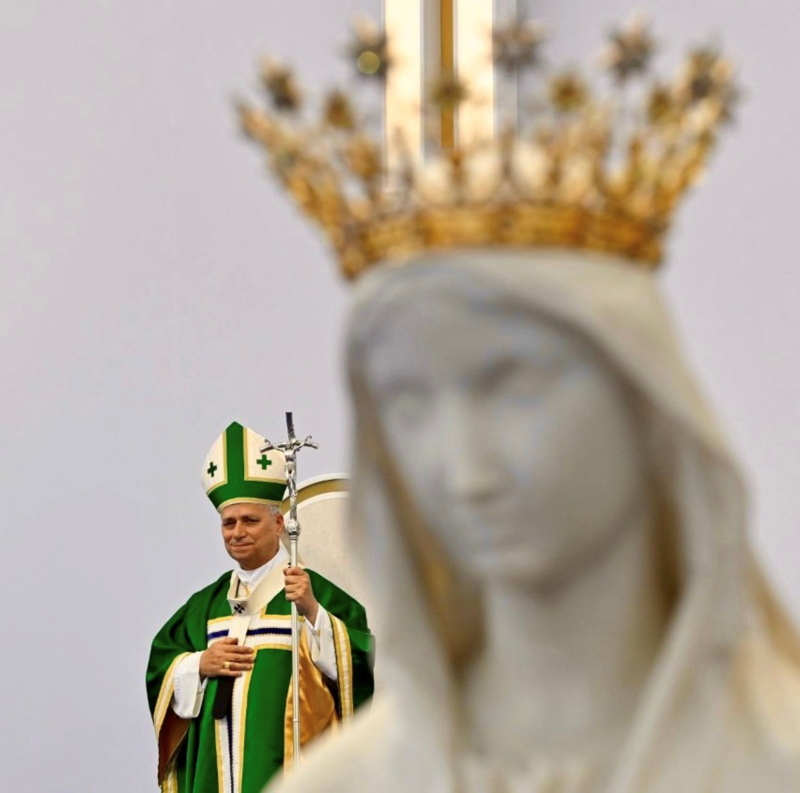
Pope Leo

Lent is a time in which the Church, guided by a sense of maternal care, invites us to place the mystery of God back in the centre of our lives, in order to find renewal in our faith and keep our hearts from being consumed by the anxieties and distractions of daily life.

Every path towards conversion begins by allowing the word of God to touch our hearts and welcoming it with a docile spirit…

This year, I would first like to consider the importance of making room for the word through listening. The willingness to listen is the first way we demonstrate our desire to enter into relationship with someone.

Our God is one who seeks to involve us. Even today he shares with us what is in his heart. Because of this, listening to the word in the liturgy teaches us to listen to the truth of reality.

In the midst of the many voices present in our personal lives and in society, Sacred Scripture helps us to recognise and respond to the cry of those who are anguished and suffering. In order to foster this inner openness to listening, we must allow God to teach us how to listen as he does.

If Lent is a time for listening, fasting is a concrete way to prepare ourselves to receive the word of God.

Abstaining from food is an ancient ascetic practice that is essential on the path of conversion. Precisely because it involves the body, fasting makes it easier to recognise what we “hunger” for and what we deem necessary for our sustenance.

Moreover, it helps us to identify and order our “appetites,” keeping our hunger and thirst for justice alive and freeing us from complacency. Thus, it teaches us to pray and act responsibly towards our neighbor…

I would like to invite you to a very practical and frequently unappreciated form of abstinence: that of refraining from words that offend and hurt our neighbour. Let us begin by disarming our language, avoiding harsh words and rash judgement, refraining from slander and speaking ill of those who are not present and cannot defend themselves.

Instead, let us strive to measure our words and cultivate kindness and respect in our families, among our friends, at work, on social media, in political debates, in the media and in Christian communities…

Finally, Lent emphasises the communal aspect of listening to the word and fasting…

Our parishes, families, groups and religious communities are called to undertake a shared journey during Lent, in which listening to the word of God, as well as to the cry of the poor and of the earth, becomes part of our community life, and fasting a foundation for sincere repentance…

Dear friends, let us ask for the grace of a Lent that leads us to greater attentiveness to God and to the least among us. Let us ask for the strength that comes from the type of fasting that also extends to our use of language, so that hurtful words may diminish and give way to a greater space for the voice of others.

Let us strive to make our communities places where the cry of those who suffer finds welcome, and listening opens paths towards liberation, making us ready and eager to contribute to building a civilisation of love.

I impart my heartfelt blessing upon all of you and your Lenten journey.

Share