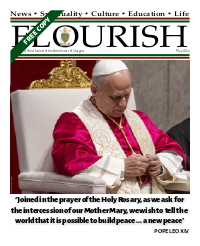
Flourish

Archbishop’s Advent message

By

If you really want to know what Advent is all about, you really need to go into a primary school and visit the children in primary one and primary two. They just can’t wait for Christmas! They have such a longing in their hearts and are already counting the days…

Read more…

Interfaith

Faith leaders sign historic declaration

In a powerful show of unity amid rising global and local tensions, faith and belief leaders from across Glasgow’s communities have signed the ‘Glasgow 850 Interfaith Declaration’ a statement of shared values and commitments to build a more just, inclusive, and compassionate Glasgow.
Read more…

Religious

Nigerian Sisters’ Glasgow welcome

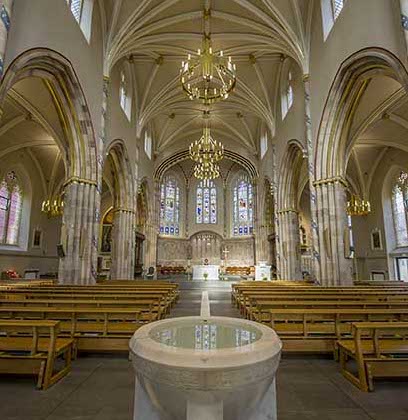
Sisters from a Nigerian order who have taken up a new ministry in the Archdiocese were given a warm Glaswegian welcome at a special Mass in St Andrew’s Cathedral.
Read more…

Holy Land

Bethlehem’s Advent of uncertainty and threat

As we look at a crib we should see hope and life in the vulnerability of the child newly born.
Read more…

December issue

Read now
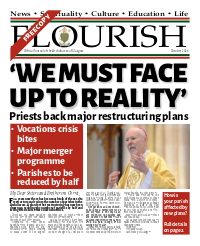
Download the December 2025 issue of Flourish (PDF, 14 MB)

Recent issues

Faith leaders sign historic declaration

By

In a powerful show of unity amid rising global and local tensions, faith and belief leaders from across Glasgow’s communities have signed the ‘Glasgow 850 Interfaith Declaration’ a statement of shared values and commitments to build a more just, inclusive, and compassionate Glasgow.

Image illustrating this story
Glasgow faith organisations came together to sign

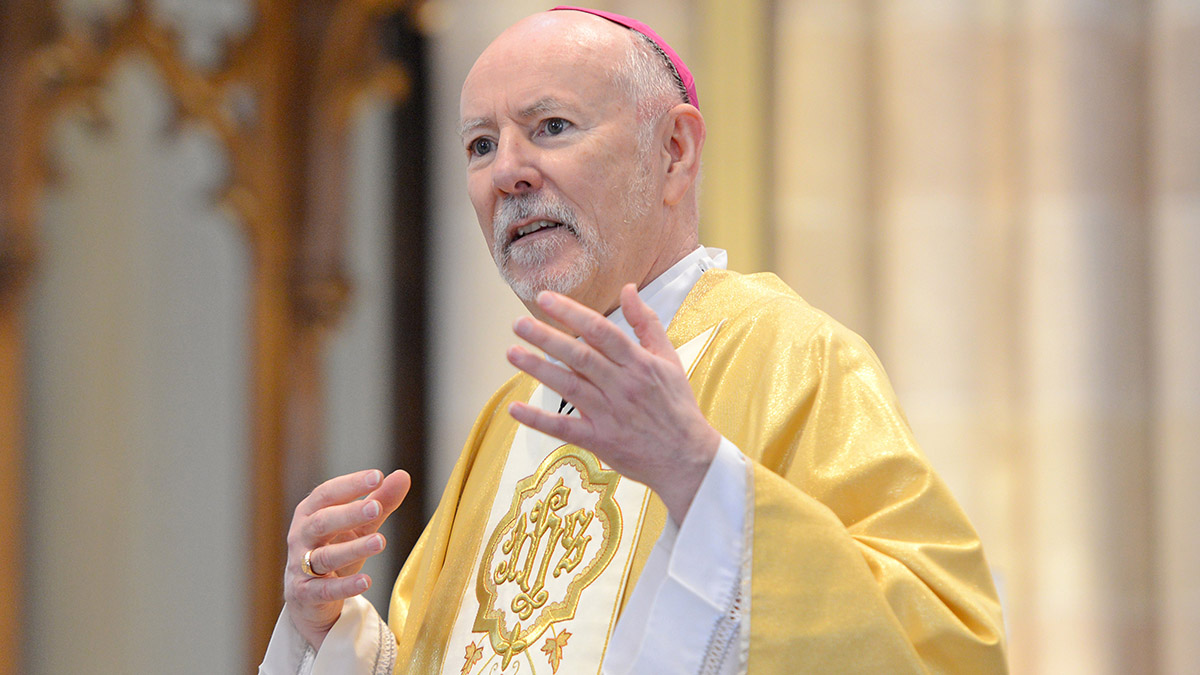
Archbishop Nolan joined faith and civic representatives to sign on behalf of the Catholic community at a reception in the City Chambers as part of Glasgow’s 850th anniversary programme.

The Declaration sets out a shared vision for the city’s future – committing its supporters to nurture understanding across faiths and worldviews; work together for equality, peace, and climate justice; welcome refugees; and challenge prejudice in all its forms.

Launched against a backdrop of hate crime, anti-immigrant sentiment, and strains on interfaith relationships caused by international conflicts and social polarisation – the Declaration states that Glasgow is a city of unity, compassion, and dialogue.

Provost

The Declaration was launched by Interfaith Glasgow in the presence of the Rt Hon The Lord Provost, Councillor Jacqueline McLaren. The Scottish Government Minister for Equalities, Kaukab Stewart MSP highlighted the significance of the occasion for Scotland.

Lord Provost, Jacqueline McLaren, said: “This Declaration is a powerful statement of common purpose, shared values and commitments from the different faith groups and communities represented in Glasgow. It is clear that with local, national and global challenges affecting our daily lives and wellbeing we need initiatives such as this, backed by leaders, with a robust action plan, to support our aim of being a just, inclusive and resilient city.”

Dr Rose Drew, CEO of Interfaith Glasgow, said: “In these challenging times, this Declaration stands as a hopeful and courageous act of solidarity. It’s a public reminder that people of all faiths and beliefs in Glasgow are committed to standing together – against hate, against division, and for the wellbeing of all.”

Archbishop Nolan said: “I welcome this declaration which recognises that the diverse faith and belief communities are a force for good in society, actively seeking peace and harmony and working together for the benefit of the people of Glasgow.”

Share

Archbishop’s Advent message

By

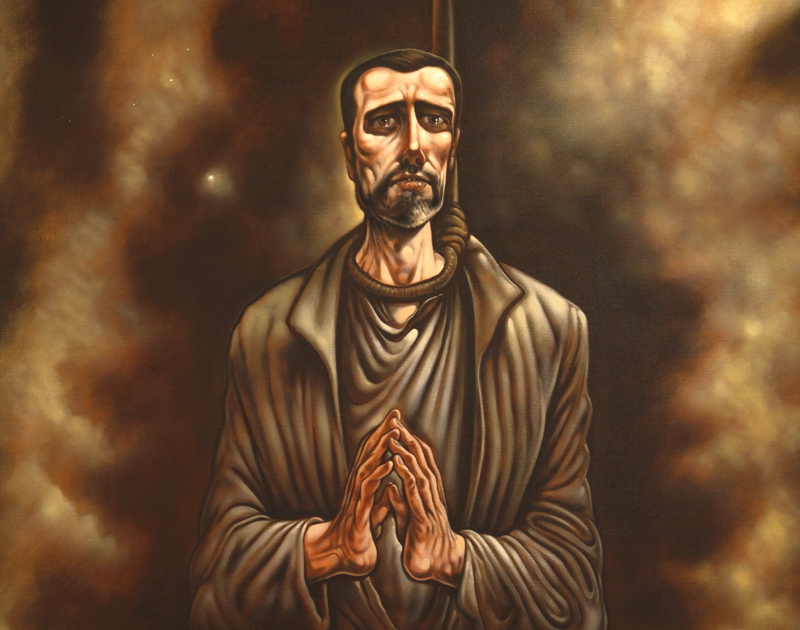
If you really want to know what Advent is all about, you really need to go into a primary school and visit the children in primary one and primary two.

Image illustrating this story
Archbishop Nolan

They just can’t wait for Christmas! They have such a longing in their hearts and are already counting the days…

Advent should be a period of longing for us too. We should try to develop that same sense of hardly being able to wait.

For the children, of course, the wait is for all the presents of Christmas morning! But for us the wait is for something different – the coming of the Emmanuel – God with us.

We are longing and waiting for God to be part of our lives and to be active in our lives.

If we have a loved one who has been away from home for a while it’s natural that we long to see them return home to be with us. Advent is like that. It’s a time for us to develop that sense of longing. We feel separated from God but we need to be with God and God needs to be with us.

The closer we get to Christmas the more the children get excited about what’s going to happen.

As we celebrate the coming of Jesus our Saviour among us, may we too be excited that the promised birth of the Saviour is taking place and God is with us.

Share

Nigerian Sisters’ Glasgow welcome

By

Sisters from a Nigerian order who have taken up a new ministry in the Archdiocese were given a warm Glaswegian welcome at a special Mass in St Andrew’s Cathedral.

Image illustrating this story
Holy Family Sisters of the Needy with Archbishop Nolan

And for Archbishop Nolan it was a chance to catch up with an old friend from his days as Bishop of Galloway.

The newly arrived religious, who belong to the Holy Family Sisters of the Needy, were in long discussion with the then-Bishop of Galloway in the hope of setting up a community in Ayrshire but despite their best efforts were unable to find suitable premises.

Speaking on behalf of the order, Sister Mary Joseph, who has been part of the order’s community in Aberdeen for the past nine years, said: “Archbishop Nolan was truly inspiring when we were in Galloway and when he moved to Glasgow, I contacted him and it was God’s will that he was able to invite us here.

“From the minute we arrived we have been blessed to receive a very warm cordial welcome from everyone.”

During their time in the Archdiocese, expected to be for at least three years, the sisters will be based in St Flannan’s presbytery, Kirkintilloch.

The leader of their local community will be Sister Maria Dymphna Maduforo, with the support of Sister Mary Chidalu Mbajiorgu, (pictured with the archbishop) and Sister Mary Nora OluChi Eleanya who will join them later.

Sister Mary Joseph added: “The Sisters will be carrying out our apostolate of giving practical love and support to the poor and the needy. They will also be involved in any other assignment the Archbishop will give them in the Archdiocese or the Parish Priest of the Parishes the Sisters belong to.

“So our work in the in the Archdiocese will be a combination of the apostolate of our Religious Order, and any required pastoral duties in the Archdiocese.“

Archbishop Nolan said: “I welcome the Holy Family Sisters of the Needy. They bring with them to the Archdiocese a lively faith, a concern for the poor and a great enthusiasm for serving God by serving God’s people. I thank God for blessing us with their presence.”

The Holy Family Sisters of the Needy was founded 42 years ago in the Archdiocese of Owerri, the capital of Imo state in South Eastern Nigeria after the Nigerian Civil War.

They now have a presence in other countries in Africa as well as in Italy, France, the USA, England, Aberdeen and now Glasgow.

Their focus is on imparting the Catholic faith and a healthy moral lifestyle to the young, on building a culture of life and on reaching out in partnership with other agencies especially to vulnerable girls and young women.

Share

Bethlehem’s Advent of uncertainty and threat

By

As we look at a crib we should see hope and life in the vulnerability of the child newly born.

Image illustrating this story
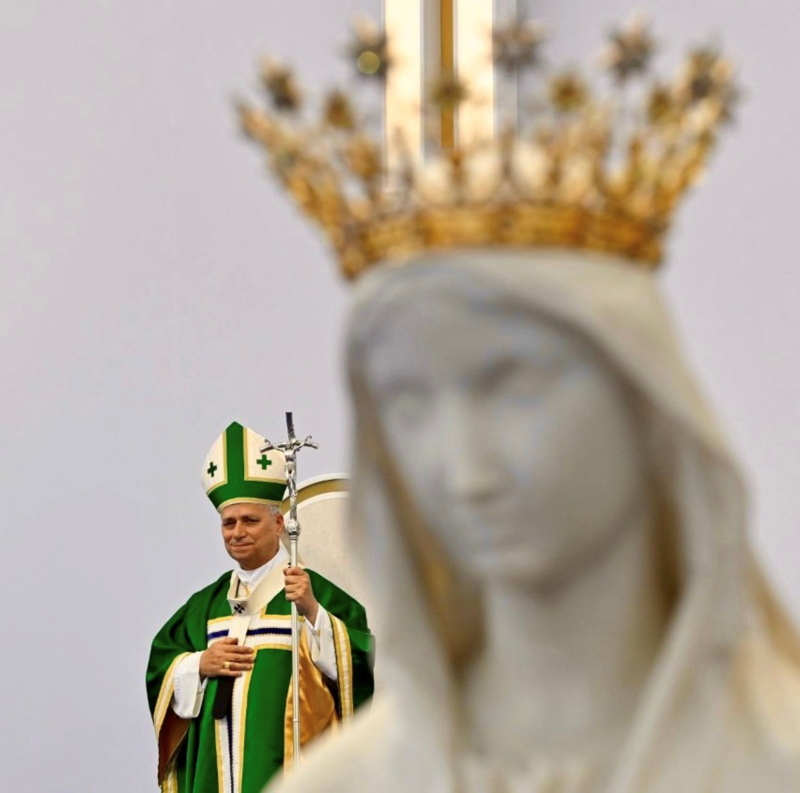
Palestinian Christians observe Christmas amid the destruction

Whatever the current political chaos that exists in Bethlehem we must remember that the significance of that town is that it is the place where hope became alive at the birth of Jesus. That is why we celebrate Christmas.

So we can celebrate Christmas while still acknowledging knowing that Bethlehem is currently suffering. The last two years and more have been a period of considerable difficulty.

Dwelling on the obstacles to peace in Bethlehem gives little cause for optimism. But understanding the willingness of the Christian communities to stay and serve all who live in Palestine does give cause for hope.

One might have thought that the first phase of the U.S.-brokered ceasefire agreement between Israel and Hamas on 10 October this year would have been a cause for celebration, securing the release of hostages held by Hamas, the release of some Palestinian prisoners and detainees, and the end to a devastating war in Gaza in a 20-point plan.

Destruction

Week-by-week people in Gaza have returned to the chaos left by two years of destruction… of places and people.

While the attention of the world has been focused on Gaza, the occupation on the West Bank proceeds apace. The illegal settlements are being constructed and the land taken over at an accelerating pace.

The move to the second phase of the so-called “Peace Plan” will confront a set of difficult issues, including the disarmament of Hamas and the future of Palestinian governance.

A ceasefire and the exchange of hostages is a far cry from “a peace plan”.

Meanwhile there is considerable uncertainty surrounding the West Bank. The sense of a continuing planned chaos is very real. There is no clear vision of what a Palestinian state might look like and what governance arrangements there might be.

Between June and September 2025 Israeli authorities advanced or approved some 20,810 housing units in the occupied West Bank, including East Jerusalem. There is no sign of this being changed after the 10 October ceasefire.

The deep-seated longing for independence and peace in this part of the Holy Land feels increasingly distant.

Around Bethlehem residents grapple with the persistent threat of violence from settlers and the tightening restrictions on movement imposed by Israel.

A growing fear among many Christians (and they are now less than 1% of the population) is the potential for Islamist radicalisation to escalate across the region, further compounding their anxieties.

People are functioning in a haze of political fog and administrative uncertainty. All around there is risk and threat. Yet the mission of the Church remains steadfastly to establish a society of peace and hope, imbued by the Gospel values to create a society of justice.

Amid all of this, should we enjoy and celebrate Christmas? Most definitely YES!

Yes, because it was the birth of Our Lord that changed the world. That is what we celebrate. We are not just celebrating small steps towards a ceasefire or reconciliation – important though these may be!

The fact that there has been created a politically chaotic world cannot obscure the reality of Jesus among us – even if we have to find Jesus in the rubble.

Share